
2026 Las Vegas Raiders Mock Draft: A Blueprint for the Silver and Black Rebuild
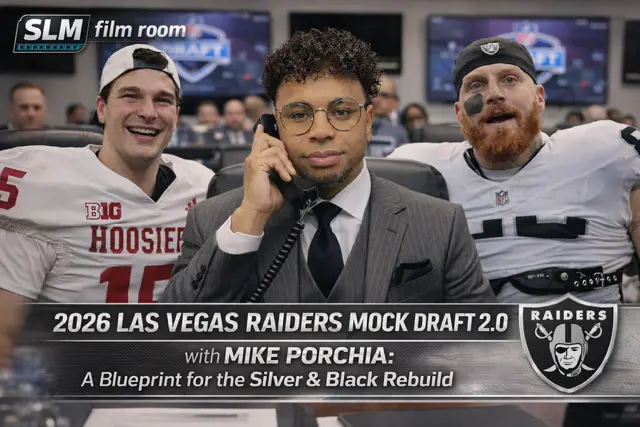
The Las Vegas Raiders are back on the clock with the first overall pick, and there is no room left for ambiguity. After a difficult three win season that exposed structural flaws across the roster, owner Mark Davis turned to general manager John Spytek and head coach Klint Kubiak with a clear directive: secure a franchise quarterback and establish a sustainable foundation.
The 2026 draft represents more than an opportunity. It is an inflection point that will define the next era of football in Las Vegas.
This seven round, Raiders focused mock draft follows a disciplined roster building philosophy. It prioritizes quarterback, reinforces protection, adds offensive weapons, and systematically builds defensive depth. The objective is not short term excitement but long term viability.
Draft Philosophy: Building with Intention
Before examining individual selections, the approach itself must be clear.
The primary tier centers on quarterback and offensive tackle. Without stability at these positions, any attempt at contention is cosmetic.
The second tier focuses on wide receiver and edge rusher. A young quarterback requires separation and reliability, while a defense anchored by Maxx Crosby must develop complementary pressure.
The final tier addresses cornerback, interior defensive line, running back, and interior offensive line. These are the connective elements that separate competitive teams from complete rosters.
Round 1, Pick 1
Fernando Mendoza, Quarterback, Indiana
The discussion begins and ends with the quarterback position.
Fernando Mendoza enters this draft cycle as the consensus top signal caller and the most natural fit for Kubiak's offensive structure. His game is defined by timing, accuracy, and processing speed rather than improvisational volatility.
Within a system built on outside zone concepts, play action, and defined reads, Mendoza's strengths align seamlessly. He operates on schedule, identifies leverage quickly, and consistently delivers accurate throws in the intermediate areas of the field.
His production profile reinforces the evaluation. Efficiency, particularly in the red zone, separates him from the rest of the class. He protects the football and maximizes possessions, two traits essential for a developing roster.
For the Raiders, this selection establishes three critical outcomes. It provides a clear face of the franchise, aligns the quarterback with the offensive system rather than forcing adaptation, and opens a valuable rookie contract window that enables broader roster construction.
Round 2, Pick 36
Spencer Fano, Offensive Tackle, Utah
Once the quarterback is secured, protection becomes the immediate priority.
Spencer Fano offers an athletic profile well suited for a movement based offensive scheme. His footwork, lateral agility, and ability to climb to the second level make him an ideal fit in outside zone concepts.
Fano projects as a day one starter at right tackle opposite Kolton Miller, giving the Raiders stability on both edges. His primary developmental area is anchor strength against power rushers, but that can be addressed within an NFL strength program.
The broader value of this selection lies in continuity. Establishing bookend tackles early in a quarterback's career creates long term stability that organizations often spend years trying to replicate.
Round 3, Pick 67
Jordyn Tyson, Wide Receiver, Arizona State
Quarterback development is directly tied to receiver separation.
Jordyn Tyson profiles as a receiver who consistently creates space rather than relying on contested situations. His route detail, burst, and ability to win against man coverage make him particularly valuable in a timing based offense.
At approximately six foot two, Tyson brings size without sacrificing fluidity. He projects as a versatile alignment piece capable of operating both outside and in the slot.
Within this offense, his role is clear. He becomes a reliable target on crossers, intermediate routes, and play action concepts, while also providing yards after catch opportunities on quick hitting designs.
This selection transitions the Raiders passing attack from reactive to structured.
Round 4, Pick 102
Princely Umanmielen, Edge Rusher, Florida State
For several seasons, Maxx Crosby has carried the burden of the Raiders pass rush.
Princely Umanmielen introduces much needed balance. His length, explosiveness, and consistent motor create immediate rotational value with long term starter upside.
Early in his career, he projects as a situational rusher who can contribute on passing downs while refining his technique. Over time, he has the tools to develop into a full time counterpart opposite Crosby.
Beyond production, his effort level aligns with the defensive identity Crosby has established. That cultural fit carries meaningful value.
Round 4, Pick 118
Kamari Lassiter, Cornerback, Georgia
Modern defensive structures require flexibility in the secondary.
Kamari Lassiter brings experience both on the boundary and in the slot, along with a physical approach to coverage and run support. His versatility allows defensive coordinators to adjust personnel without sacrificing structure.
He enters as an immediate contributor in sub packages with a pathway to a larger role as he develops. While not a headline acquisition, he represents the type of reliable depth piece that strong defenses consistently feature.
Round 5, Pick 141
Ty Hamilton, Defensive Tackle, Ohio State
Interior defensive stability often determines early down success.
Ty Hamilton provides strength at the point of attack, strong leverage, and the ability to occupy blockers. His role centers on run defense and interior control rather than statistical production.
For the Raiders, his presence improves linebacker efficiency and preserves edge rushers for passing situations. These incremental improvements collectively elevate defensive consistency.
Round 5, Pick 162
La'Damian Webb, Running Back, South Alabama
In a Kubiak system, the running game is foundational.
La'Damian Webb offers vision, patience, and one cut decisiveness that align with zone running principles. He also contributes as a receiver, providing a reliable outlet for a young quarterback.
This selection is not about star power. It is about maintaining offensive balance and avoiding unnecessary investment in a volatile position.
Round 6, Pick 184
Tanor Bortolini, Interior Offensive Line, Wisconsin
Interior pressure is one of the quickest ways to disrupt quarterback development.
Tanor Bortolini brings positional versatility with experience at both guard and center. His mobility and understanding of zone concepts make him a valuable depth piece with developmental upside.
He provides immediate insurance and long term flexibility along the interior.
Round 7, Pick 220
Josh Proctor, Safety, Ohio State
Late round selections often define special teams performance.
Josh Proctor projects as a physical contributor capable of impacting multiple phases. He offers depth at safety while strengthening coverage units, an area that frequently determines field position over the course of a season.
The Impact of This Draft Class
This class is defined by cohesion rather than flash.
The Raiders secure a franchise quarterback in Fernando Mendoza. They protect him with Spencer Fano and support him with a receiver who can consistently separate in Jordyn Tyson. Defensively, they introduce rotational depth and structural balance while reinforcing the secondary and special teams.
Each selection connects to a broader identity. Offensively, the team leans into timing, structure, and efficiency. Defensively, it builds effort driven depth with flexibility across the formation. From a roster construction standpoint, it prioritizes young, cost controlled talent aligned with a quarterback contract window.
The Maxx Crosby Variable
No evaluation of the Raiders' future is complete without addressing Maxx Crosby.
Recent developments involving a potential trade to the Baltimore Ravens introduced uncertainty, but the collapse of that deal has repositioned Crosby as the centerpiece of the defense once again.
In the short term, he anchors the unit and establishes the standard for effort and production. In the medium term, his presence provides flexibility. If the rebuild accelerates, he becomes the emotional and competitive core of a playoff push. If not, his value can be revisited in future discussions.
The most effective strategy for 2026 is straightforward. Retain Crosby, build around him, and ensure his impact is complemented rather than isolated.
Final Outlook
This mock draft outlines a disciplined reset rather than another temporary adjustment.
A franchise quarterback, reinforced protection, functional offensive weapons, and a defense built on depth and effort collectively shift the trajectory of the organization.
If executed effectively, this approach moves the Raiders beyond the cycle of short term fixes and toward a defined identity.
In that scenario, Allegiant Stadium transforms from a venue searching for answers into a foundation for sustained competitiveness.
And if that foundation holds, the message to the rest of the conference becomes clear.
The standard in Las Vegas is no longer rebuilding. It is arriving.