
Inside the 2026 WNBA Draft at The Shed
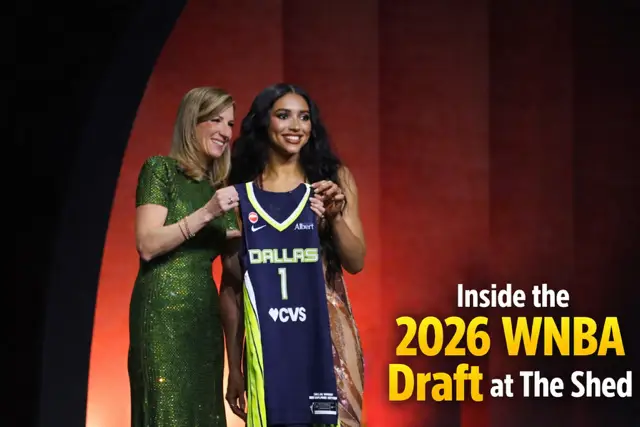
Inside The Shed in New York City, the league leaned fully into the moment. The orange carpet, the lights, the production value. It all carried the energy of a season opener rather than a procedural draft night. Forty five players heard their names called, stepping into a league that looks and feels very different than it did just a few years ago.
A year after Paige Bueckers went No. 1 and helped elevate the league's visibility, the Dallas Wings found themselves back at the top of the board. This time, they made a move that was as much about fit as it was about talent. Dallas selected Azzi Fudd, reuniting her with Bueckers and reinforcing a direction built around shooting, spacing, and chemistry.
A League Operating in a New Reality
This draft reflected a shift that has been building for years.
The 2026 salary cap jumped to around $7 million, a massive increase from just over $1.5 million the season before. That kind of growth changes how teams operate. Front offices now have room to build instead of simply adjust.
The impact shows up immediately in rookie contracts. The top overall pick is now earning around $500,000, a number that once felt out of reach for incoming players. These are no longer low risk additions. They are real investments.
The presentation matched the stakes. Hosting the draft at The Shed, with a full scale broadcast and a clear visual identity, made it clear the league understands its moment. This is not just about filling rosters. It is about building momentum.
Dallas Builds Around Fit and Firepower
The Wings did not complicate the decision.
Azzi Fudd enters the league as one of the most reliable shooters in the class. Her ability to move without the ball, create space, and get shots off quickly makes her an immediate threat. But the bigger story is how she fits.
Playing alongside Paige Bueckers and Arike Ogunbowale, Fudd steps into a backcourt that can attack in multiple ways. All three can handle. All three can score. All three force defenses to stretch.
If her shooting translates early, the impact will be clear. The floor opens up. Driving lanes appear. Defenses are forced to make uncomfortable choices. Dallas is not just adding talent. They are shaping an identity.
The Top of the Draft Tells the Story
The first five picks reflected where the league is heading.
Dallas took Fudd at No. 1. Minnesota followed with Olivia Miles, a guard who can control pace and create offense. Seattle added Awa Fam, a mobile center with defensive upside. Washington selected Lauren Betts, one of the most polished bigs in the class. Chicago rounded out the top five with Gabriela Jaquez, a tough, versatile guard coming off a championship run at UCLA.
The pattern is clear. Teams are prioritizing players who can operate in space, defend across positions, and impact the game in more than one way.
Olivia Miles Brings Control to Minnesota
Miles may be the most creative playmaker in this class.
She sees the floor differently. In pick and roll situations, she reads defenses early and delivers passes others do not attempt. Her ability to control tempo and elevate teammates gives her immediate value.
For Minnesota, she projects as a long term answer at point guard. The question will be her scoring consistency against professional defenses. If that develops, her ceiling rises significantly.
Seattle Bets on Growth with Awa Fam
Awa Fam represents the direction of the modern center.
She is long, mobile, and comfortable defending in space. At just 19 years old, she is still developing, especially on the offensive side, but her defensive instincts and ability to impact the game without the ball stand out.
Seattle does not need her to carry a scoring load right away. They can bring her along while leaning into her strengths. That kind of environment could allow her to grow into a major piece for the future.
UCLA's Influence Was Everywhere
UCLA had one of the most impactful draft nights of any program.
Six players were selected within the first 18 picks, including Lauren Betts and Gabriela Jaquez in the top five. That speaks to more than talent. It reflects a system that prepares players for the next level.
Their style translates. Spacing, ball movement, defensive versatility. The same qualities that led to a national title are now being valued across the league.
Lauren Betts Arrives Ready
Lauren Betts enters the WNBA with one of the strongest resumes in the class.
She brings size, efficiency, and presence in the paint. Offensively, she can score and facilitate. Defensively, she protects the rim and controls the glass.
For Washington, she offers stability. In a league that often stretches the floor, having a reliable interior anchor still matters.
Gabriela Jaquez Fits the Chicago Identity
Jaquez brings a different kind of value.
She may not have the flash of other top picks, but her impact shows up across the game. Defense, physicality, decision making. She plays with an edge that coaches trust.
In Chicago, she projects as a connector. Someone who defends, moves the ball, and makes winning plays. If her offensive game expands, her role could grow quickly.
A Move That Turned Heads
Every draft has a moment that shifts the conversation.
This year, it came with the movement of Flau'jae Johnson to Seattle. Pairing her with Awa Fam gives the Storm a young core built on energy, defense, and upside.
In a league where versatility matters more than ever, that combination could pay off in a big way.
What Comes Next
The WNBA season tips off May 9, and the transition will be immediate.
Roster spots are limited. Roles are smaller. The margin for error is thin.
For contenders, rookies will be asked to contribute in specific ways. For teams building toward the future, this class represents opportunity.
If players like Fudd, Miles, Fam, Betts, and Jaquez develop as expected, this draft will be remembered as more than just a talent infusion. It will be seen as part of a larger shift in the league's growth, visibility, and direction.