MLB's ABS Era Is Here — And It's Already Changing the Game
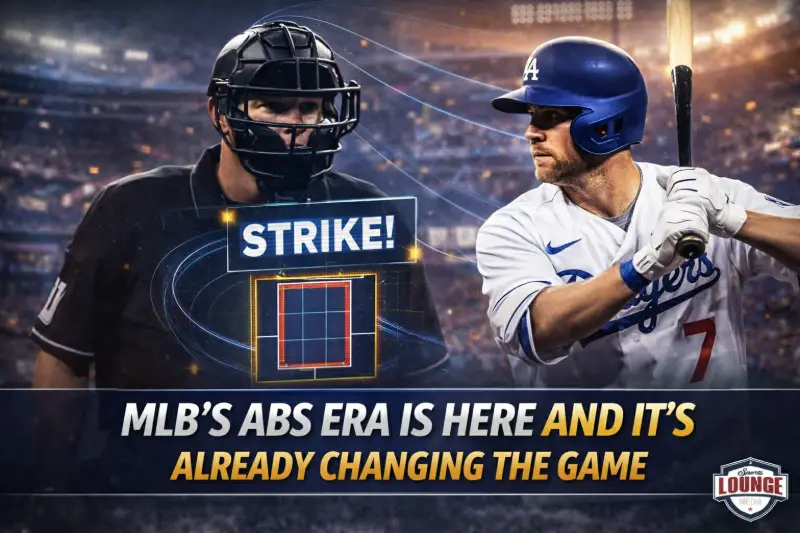
The Major League Baseball has officially stepped into a new technological frontier with the Automated Ball-Strike (ABS) Challenge System, debuting in the 2026 season. Often dubbed "robot umps," the system isn't fully replacing umpires but it is redefining how balls and strikes are called, challenged, and strategically leveraged.
How ABS Works
At its core, ABS uses Hawk-Eye tracking technology to determine whether a pitch is inside a dynamically calculated strike zone based on each batter's height. This precision-based approach has established clear parameters for the game:
- Strike Zone Range: 27% to 53.5% of batter height
- Challenges Per Game: Each team starts with 2 challenges per game
- Challenge Retention: Challenges are retained if successful
- Who Can Challenge: Only batters, pitchers, or catchers can initiate them
The system is remarkably fast and results appear almost instantly on stadium boards and broadcasts, keeping the game's pace intact while adding a layer of technological accountability.
Early Season Challenge Data
The numbers from the 2026 season reveal fascinating patterns about how teams are using the ABS system:
- Average Challenges: ~3.7 challenges per game early in 2026
- Timing: Majority occur late in games (6th–9th innings)
- Pitch Volume: Only ~2.6% of pitches are actually challenged
This data suggests teams are being strategic, saving their challenges for high-leverage situations rather than using them frivolously.
Success Rates: What the Numbers Show
The ABS system has already demonstrated impressive consistency in overturning calls:
- Spring Training Overturn Rate: 52.2%
- Early Regular Season Overturn Rate: 51.7%
- Minor League Alignment (2025): ~52–53%
These numbers suggest the system is working as intended, with roughly half of challenged calls being overturned (a statistic that aligns across different levels of play).
The CB Bucknor Effect: ABS Exposing Umpire Variance
While ABS has brought consistency to ball-strike calls, it has also shined a spotlight on individual umpire performance. CB Bucknor, long one of the most scrutinized umpires in Major League Baseball alongside Angel Hernandez, has become the poster child for this exposure.
The Stats: Bucknor is being challenged and overturned on an average of almost 75% of the time, a stark contrast to the league average of approximately 52%.
What This Means for Baseball
1. Players Are Targeting Him
Teams are clearly recognizing tendencies and adjusting their strategy accordingly. There's a more willingness to challenge borderline calls when Bucknor is behind the plate, especially in key counts. This isn't necessarily a knock on Bucknor as a person, it's teams playing smart baseball by exploiting patterns they've identified.
2. Small Sample, Big Spotlight
It's important to note that these statistics come from very early season data. One bad game can heavily skew totals, and we're still in the early innings of the ABS era. However, perception matters in sports, and ABS makes errors visible instantly to millions of viewers. The technology has removed the ambiguity that once protected umpires from intense scrutiny.
3. ABS Is Exposing Variance
Bucknor isn't alone in being exposed by ABS but he's among the most exposed so far. A high overturn percentage indicates lower alignment with the strike zone technology, raising questions about consistency and accuracy that were harder to quantify in the pre-ABS era.
Should Umpires Be Graded on Their Umpiring?
This is the question that ABS has forced baseball to confront. With objective data now available for every pitch, the conversation around umpire accountability has shifted from subjective criticism to measurable performance metrics.
The technology doesn't eliminate umpires. They still manage the game, make judgment calls on other aspects of play, and maintain the integrity of the sport. But it does create a new standard for the one thing they've traditionally owned: calling balls and strikes.
As the 2026 season progresses, we'll likely see more discussion about whether umpires should be formally evaluated based on their alignment with ABS data. For now, the system is simply revealing what was always true: some umpires are more consistent than others, and technology has finally made it impossible to ignore.