
Red Wings at a Crossroads: Will Detroit Consider a New GM If the Playoff Drought Continues?
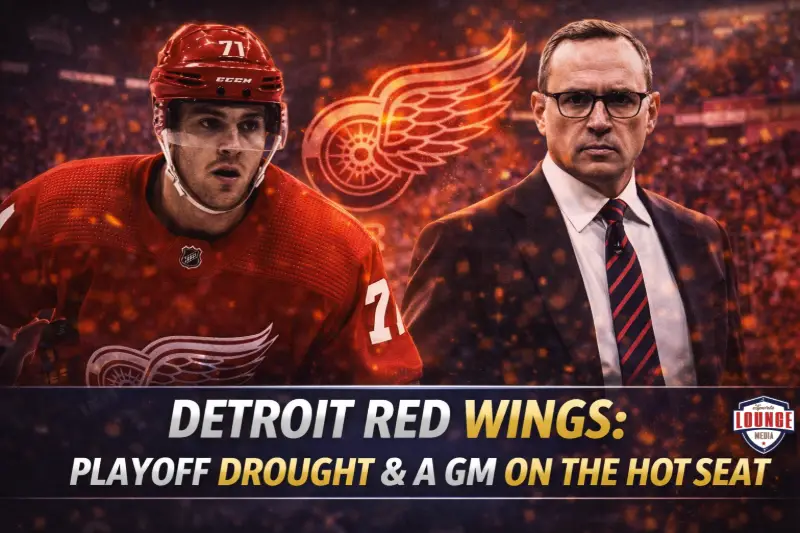
The story of the Detroit Red Wings over the past several seasons has been one of patience, promise, and more recently, mounting frustration. Once the gold standard of consistency in the NHL, Detroit now finds itself flirting with another missed postseason. And with expectations rising, one question is beginning to circulate louder than ever: If the Red Wings fall short again… could a change at General Manager be on the table?
The Yzerman Plan: Still Sacred or Starting to Crack?
When Steve Yzerman took over as GM in 2019, the hire felt like destiny. A franchise legend returning home to rebuild a fallen powerhouse, it was a storyline straight out of hockey mythology.
And to his credit, Yzerman has executed a methodical rebuild:
- Stockpiled draft picks
- Avoided long-term cap disasters
- Built one of the league's deeper prospect pools
- Added cornerstone talent like Moritz Seider and Lucas Raymond
For a time, patience wasn't just accepted, it was expected. But rebuilds come with a shelf life. And in 2026, that timeline is starting to feel… stretched.
Expectations vs. Reality
This season was supposed to be different.
Detroit entered the year with:
- A maturing young core
- Increased depth scoring
- Improved goaltending stability
- Playoff expectations, not just hopes
Yet inconsistency has defined their campaign. The Red Wings have hovered around the playoff bubble, struggling to string together meaningful winning streaks and often falling short in high-stakes games. In a competitive Atlantic Division, moral victories don't cut it anymore. At some point, progress must translate into results.
The Case For Keeping Yzerman
Before calling for sweeping changes, it's important to acknowledge why ownership may stay the course.
1. Proven Track Record
Yzerman isn't just any executive, he architected a Stanley Cup contender with the Tampa Bay Lightning. His long-term vision has worked before, and that pedigree carries significant weight in ownership circles.
2. The Core Is Still Young
Detroit's best players are still developing:
- Moritz Seider (defense anchor)
- Lucas Raymond (top-line winger)
- Emerging prospects still on the way
Firing a GM mid-rebuild can disrupt development timelines and send mixed messages to a young roster that's still finding its identity.
3. Stability Matters
Constant front office turnover is often a sign of dysfunction. The Red Wings have prided themselves on being the opposite of that and that organizational stability has been a competitive advantage in attracting talent and maintaining culture.
The Case For Moving On
That said, the NHL is a results-driven league. And patience has limits.
1. Rebuild Fatigue
It's been nearly a decade since Detroit was a true contender. Fans and ownership may no longer accept "we're close" as an answer. There's a finite window of goodwill before expectations demand tangible playoff appearances.
2. Free Agency & Asset Questions
Some critics point to:
- Expensive free-agent signings that haven't fully delivered
- Conservative trade strategies that may have missed opportunities
- A lack of aggressive "win-now" moves when the window was opening
If the team is stuck in the middle, neither rebuilding nor contending, responsibility falls squarely on roster construction and front office decision-making.
3. Missed Opportunity Window
The NHL rewards teams that capitalize when their young stars are still on affordable deals. Detroit risks missing that window if progress stalls. The salary cap doesn't get easier, and the window for championship contention with this core could slam shut faster than anyone expects.
Ownership Pressure: The X-Factor
The Ilitch family, which owns the Red Wings, has historically valued loyalty and patience but also expects competitiveness. If the team narrowly misses the playoffs again, ownership faces a tough decision:
- Stay loyal to Yzerman and trust the process?
- Or pivot to a new voice to accelerate contention?
The answer may depend less on standings and more on trajectory. Are the Red Wings trending up or plateauing? A team that's clearly improving but falls just short of the postseason tells a different story than one that's stagnating.
What Would a GM Change Even Look Like?
If Detroit were to move on (still a big "if"), the next GM would inherit an attractive situation:
- A solid prospect pipeline
- A manageable cap situation
- A core ready to compete now
But attractive situations also come with expectations. A new GM would likely:
- Be more aggressive in trades
- Target elite scoring talent to complement the young core
- Push the team firmly into "win-now" mode
But that approach carries risk, especially if it sacrifices long-term sustainability for short-term gains. The Red Wings would be betting that a new voice could accelerate contention without dismantling the foundation Yzerman built.
The Locker Room Factor
Another piece often overlooked in front office decisions is player sentiment. Yzerman's reputation commands respect across the league and inside the room. A sudden change could:
- Shake confidence in young players still developing
- Reset relationships and team dynamics
- Alter the team's identity and philosophy
For a young roster still building chemistry, that's not a small consideration. The locker room buy-in matters more than most fans realize.
The Most Likely Outcome
Let's be realistic. Even if Detroit misses the playoffs, a Yzerman firing isn't the most likely scenario. Why? Because:
- The rebuild has shown tangible progress
- The core is not yet at its peak
- Ownership values continuity and stability
However, and this is crucial, the margin for error is shrinking. Another underwhelming season in 2026–27 could shift the conversation from "should we be patient?" to "why are we still waiting?" The patience well isn't infinite, and the Red Wings organization knows it.
Final Thoughts: A Defining Summer Ahead
The Red Wings are no longer rebuilding in obscurity, they're rebuilding under expectation. That changes everything.
This offseason could define the next decade of Detroit hockey:
- Do they double down on Yzerman's vision?
- Do they push for more aggressive roster moves?
- Or do they make the bold decision to change leadership?
One thing is certain: The days of quiet patience in Detroit are over. And if the playoffs remain out of reach, the pressure won't just be on the players, it will land squarely on the front office.
Bottom line: Steve Yzerman is still the face of the Red Wings' future but for the first time since his return, that future feels uncertain. If the team continues to underperform, the question shifts from whether change is possible to whether it becomes necessary.