
The 2026 World Cup Stage: Spain's Historic Championship Run
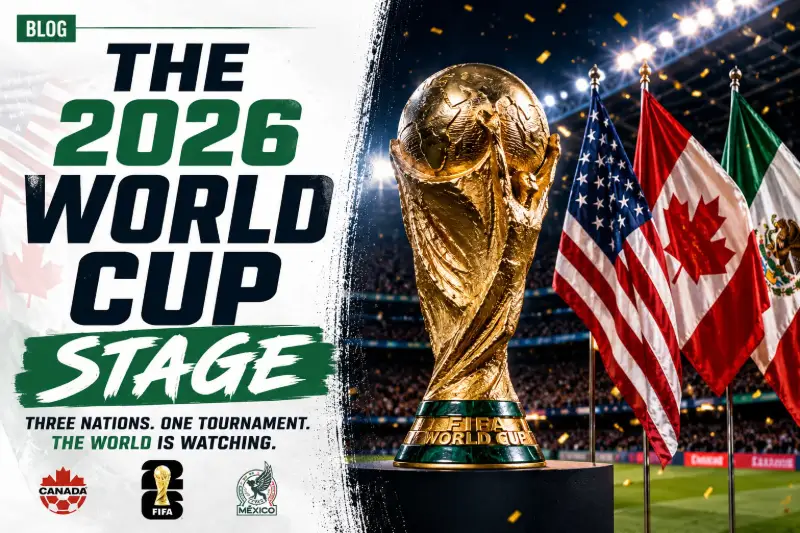
The 2026 FIFA World Cup expanded the game's biggest stage across three host nations; United States, Mexico, and Canada turning the tournament into a month-long traveling festival of football. From New York to Dallas, Miami to Mexico City, the blend of football culture and American-style event production created a unique backdrop for a historic edition of the World Cup.
The larger field and extended format amplified everything: more fanbases in the building, more storylines, and more pressure games earlier in the tournament. By the time the knockout rounds hit, the tournament had already produced breakout stars, shock exits, and a clear sense that the traditional balance of power in world football is shifting.
Group Stage Storylines
The group stage delivered the World Cup's usual mix of dominance and chaos, with top seeds flexing their pedigree while dark horses announced themselves to the world. Tactical diversity was on full display, some teams pressed high and played vertically, while others sat deeper, absorbed pressure, and relied on quick transitional attacks.
Spain signaled early that they were built differently this cycle, controlling matches with suffocating possession and defensive structure that simply did not bend. Argentina, meanwhile, leaned into their attacking identity, finding goals in key moments and playing with the emotional edge that has defined their modern World Cup profile.
The Road Through the Knockouts
Once the tournament hit knockout mode, every mistake felt fatal and every moment of quality felt legendary. Extra-time thrillers and penalty shootouts reminded everyone why World Cup football is the most unforgiving, emotionally charged format in the sport.
Spain moved through their side of the bracket with ice-cold control, eliminating heavyweights like France in the semifinals with a 2–0 performance that looked more like a clinic than a contest. Argentina, on the other side, punched their ticket to the final by grinding out a 2–1 win over England in the semifinal, surviving long stretches of pressure before closing the door late.
England's Third-Place Statement
The third-place match in Miami turned into an instant cult classic, as England and France combined for a 10-goal shootout that felt more like an All-Star game than a World Cup playoff. England came out blazing, with Declan Rice, Ezri Konsa, and a rapid Bukayo Saka brace building a commanding lead by halftime.
France refused to go quietly behind Kylian Mbappé, who scored twice and pushed his World Cup goal tally into record-breaking territory, but England's late penalty from Saka and a stoppage-time strike from Jude Bellingham sealed a 6–4 win. The victory delivered England's best World Cup finish since their 1966 title, and Saka's hat trick cemented his status as one of the tournament's signature stars.
Golden Boot: Mbappé's Historic Scoring Run
The 2026 FIFA World Cup Golden Boot belonged to Kylian Mbappé, who lit up the tournament with a stunning 10 goals in eight matches for France. His scoring form was relentless from the group stage through the knockouts, consistently dragging France into shootouts and high-tempo contests where his pace, movement, and composure in front of goal separated him from every other forward in the competition.
What makes this Golden Boot even more significant is the context. France did not reach the final, ultimately finishing fourth after a chaotic 6–4 defeat to England in the third-place match, yet Mbappé still finished comfortably ahead of the field. He delivered when it mattered most, including a brace in that third-place thriller, pushing his tally to a mark no one else could touch. With this performance, he became the first player in history to win the World Cup Golden Boot twice, cementing his status not just as the face of French football, but as one of the defining attackers of the modern era.
Spain's Historic Clean Sheet Run
If there is one defining tactical storyline from 2026, it is Spain's defensive masterpiece of a tournament. Across group and knockout play, Spain did not concede a single goal, running the table at a World Cup without letting anyone score on them.
This was not just about a strong back four; it was a full-squad defensive philosophy built around control of space and the ball. Their midfield suffocated opposition build-up, their pressing triggers were precise, and their keeper and backline handled the few clean looks they allowed with ruthless efficiency.
Argentina's Passion and Firepower
Argentina came into 2026 as the defending global powerhouse with an attacking identity that still scares backlines on sight. They navigated a tricky path to the final by leaning into what they do best, embracing chaos in the final third, trusting their individual quality, and stepping up in big moments.
In tight knockout matches, Argentina repeatedly found the one moment of brilliance they needed, whether through incisive passing sequences, strikes from distance, or clutch finishing under pressure. That ability to manufacture goals in high-leverage moments made them the perfect foil for Spain's total defensive control heading into the final.
The Final: Spain vs Argentina
The World Cup final at MetLife Stadium in New York/New Jersey delivered the matchup everyone wanted: Spain versus Argentina, Europe versus South America, control versus chaos. The setting itself felt cinematic, an NFL stadium turned world football theater, packed with a divided crowd pulsing with energy and expectation.
For 90 minutes, it played out like a chess match layered over a heavyweight fight, with Spain dictating tempo while Argentina searched for the one gap they could exploit. Spain's back line and midfield block stayed locked in, bending in moments but never breaking as they protected the clean-sheet streak that had defined their tournament.
Extra Time, One Moment, One Champion
With regular time unable to separate them, the final moved into extra time, and that is where Spain finally found their decisive moment. A sharp attacking sequence ended with Ferran Torres producing the breakthrough, scoring the only goal of the match and sending the Spanish supporters into eruption.
That 1–0 win over Argentina delivered Spain their second World Cup title and capped a defensive run that will sit in the history books for decades. They became world champions again without ever allowing a single goal, completing one of the most dominant and disciplined defensive campaigns the World Cup has ever seen.
Legacy of the 2026 Tournament
This World Cup will be remembered for more than just who lifted the trophy, it will be remembered for how they did it. Spain showed that in an era obsessed with highlight-reel attacking football, an elite, collective defensive identity can still own the biggest stage.
At the same time, Argentina's run reinforced the power of attacking courage and emotional fire, while England's wild run to third place hinted at a new generation ready to carry the Three Lions deeper into future tournaments. For the Americas hosting and competing, 2026 also felt like a statement that the continent is ready to be a long-term hub for global football culture, not just a one-off World Cup destination.
Halftime Show: A Message Bigger Than Football
The 2026 World Cup final halftime show was built around more than star power and staging, it was crafted as a statement about unity, education, and global opportunity. On the biggest stage in world football, the performance used music and visuals to push a clear message: the game that unites billions can also be a platform to fight inequality and open doors for the next generation.
Throughout the show, the creative direction leaned into themes of inclusion, cultural pride, and hope. The set design and video packages highlighted children and communities from around the world, tying the energy of the stadium to a narrative about access to education, safe play spaces, and the idea that talent exists everywhere, it just needs a chance to be seen. The message was simple but powerful: the same passion that drives fans to live and breathe this sport can be harnessed to drive real change off the pitch.
By framing the halftime show around this mission, the World Cup final became more than a championship match; it became a global broadcast for a cause. The performance reminded viewers that football is not just entertainment, it is a connector. In a tournament already defined by Spain's defensive perfection and Argentina's emotion-filled run, the halftime message added another layer to 2026: this World Cup was not only about who lifted the trophy, but about what the moment could inspire for millions of kids watching around the world.
Final Writer's Corner: Spain vs Argentina, and a Wall Nobody Could Break
From a storyteller's lens, the 2026 World Cup final was the perfect narrative collision: Spain, the team that turned defense into an art form, against Argentina, the side that came armed with all the tools to ruin a clean sheet. Ninety-plus minutes, multiple game states, tactical tweaks and it did not matter; nobody could solve Spain.
No nation scored on Spain in the entirety of the 2026 World Cup. Not in the group stage, not in the knockouts, not even Argentina on the biggest night of them all under the lights in New Jersey.
In an expanded tournament hosted across three countries, with more elite attackers, more games, and more chaos than ever before, Spain built a wall that simply never cracked. And when Ferran Torres' extra-time winner hit the back of the net, Spain did not just win a World Cup, they authored a defensive legacy that every future champion will be measured against.