
The Relentless Machine: How the Los Angeles Dodgers Are Dominating the Season
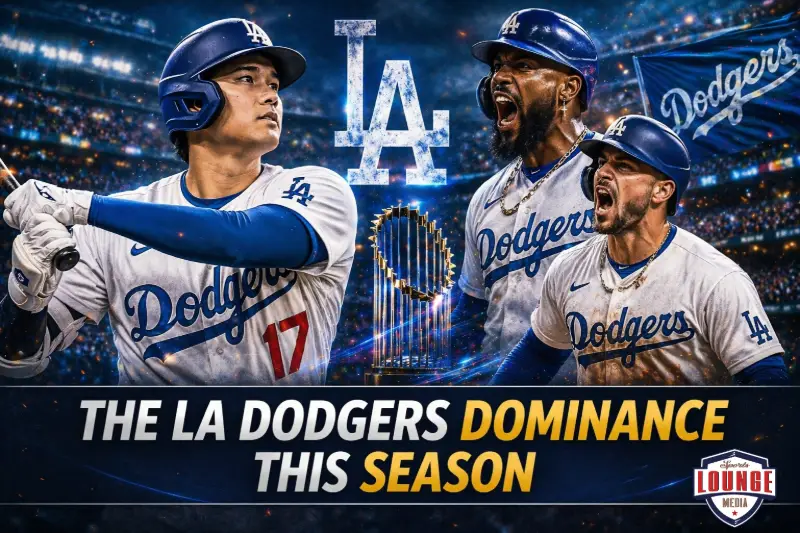
There's dominance and then there's what the Los Angeles Dodgers are doing right now.
Through the early stretch of the season, the Dodgers haven't just been winning games, they've been controlling them. From explosive offensive output to a pitching staff that suffocates opponents, this team looks less like a contender and more like a fully operational machine. And the scary part? They may still have another gear.
This isn't a hot streak. It's a blueprint.
A Lineup With No Breathing Room
The Dodgers' offense isn't built around one superstar, it's built around waves of them. Facing this lineup feels like trying to put out a fire with a garden hose. It's relentless, it's comprehensive, and it's designed to break down defenses through sheer consistency and quality.
At the top, Mookie Betts continues to set the tone with an almost mechanical precision. His ability to get on base, hit for power, and dictate the pace of the game makes him one of the most complete players in baseball. He's not just getting hits; he's creating situations. Behind him, Freddie Freeman is doing what he always does, delivering professional at-bats and punishing mistakes with surgical precision. Freeman represents the kind of steady excellence that championship teams are built on.
And then there's the global superstar factor: Shohei Ohtani. Even in a season where his pitching role may be limited or absent, his presence in the batter's box changes everything. Pitchers don't just face Ohtani, they plan the entire series around him. His combination of speed, power, and baseball intelligence creates matchup nightmares for opposing pitchers and defensive coordinators.
What makes this lineup especially dangerous is its depth. There are no easy outs. Whether it's the middle of the order or the bottom third, the Dodgers consistently grind at-bats, drive up pitch counts, and capitalize on even the smallest mistakes. Role players like Miguel Rojas and Chris Taylor provide the kind of versatility and clutch hitting that turns good offenses into great ones. Every spot in the order represents a potential threat.
This isn't just an offense, it's a pressure system that compounds with every batter. Teams don't face one superstar; they face a gauntlet of excellence.
Pitching That Silences Momentum
While the offense grabs headlines, the Dodgers' pitching staff is what truly separates them from the rest of the league. This is where championships are won and lost.
The addition of Yoshinobu Yamamoto has brought a new level of precision and composure to the rotation. His command and pitch mix make him incredibly difficult to square up, and he's quickly proving why he was one of the most sought-after pitchers in the world. Yamamoto doesn't just throw strikes, he paints corners with the kind of accuracy that makes hitters feel helpless.
Alongside him, Tyler Glasnow provides power and swing-and-miss stuff that can dominate any lineup on any given night. Glasnow's ability to reach back and elevate his fastball while mixing in devastating breaking balls creates a dynamic that's nearly impossible to time. And with Walker Buehler working his way back into form, the rotation has the potential to be downright overwhelming. When healthy, Buehler adds another elite arm to a rotation that's already among baseball's best.
But it doesn't stop with the starters. The Dodgers' bullpen has been equally impressive, locking down leads, limiting damage, and keeping games within reach when needed. Evan Phillips, Brent Honeywell, and others bring the kind of high-velocity, late-inning dominance that opposing hitters dread. There's a quiet confidence in how this staff operates. No panic. No wasted motion. Just execution. The bullpen doesn't view their role as damage control; they view it as finishing the job that the starters began.
Depth: The Dodgers' Secret Weapon
Every team deals with injuries. Every team faces slumps. Not every team has answers waiting on the bench.
The Dodgers' depth allows them to absorb setbacks without losing momentum. Role players step in seamlessly. Utility guys produce like everyday starters. Prospects contribute when called upon. This organizational strength isn't accidental, it's the result of years of elite scouting, player development, and front office decision-making.
The Dodgers don't just build rosters; they build systems that sustain success. They understand that in baseball's long season, the team that can weather injuries, slumps, and adversity while maintaining competitive excellence is the team that wins championships. Every player in the organization knows their role and is prepared to execute it at the highest level.
This depth also provides flexibility in strategy. The front office can take calculated risks, trade for specific needs, or promote young talent without fear of creating gaps in the roster. It's a luxury that most teams simply don't have, and it's a major reason why the Dodgers consistently find themselves in contention year after year.
Right now, that system is firing on all cylinders.
The Culture of Expectation
Winning in Los Angeles isn't a goal, it's an expectation. Inside the clubhouse, there's a standard that permeates every decision and every action. It's not about streaks or stats; it's about consistency. The Dodgers approach each game with the same focus, whether it's April or October.
That mindset shows up in the small details that separate good teams from great ones:
- Smart base running that creates additional scoring opportunities
- Disciplined at-bats that work counts and force opposing pitchers to throw more pitches
- Clean defensive execution that prevents self-inflicted wounds
- Situational awareness that maximizes run production
- Mental toughness that prevents momentum swings
Managerial stability and veteran leadership play a huge role here. Dave Roberts has built a culture where players know their roles. They trust the system. And most importantly, they don't try to do too much. They understand that consistency beats heroics over the course of a 162-game season. Veterans like Mookie Betts and Freddie Freeman set the tone through their professionalism and work ethic, influencing younger players to adopt the same approach.
They just keep winning.
Dodger Stadium: A Fortress
There's something different about playing at Dodger Stadium. The energy. The crowd. The history. Opposing teams feel it the moment they step onto the field. And the Dodgers feed off it.
Early in the season, they've turned their home ballpark into a near-impenetrable fortress, stacking wins and building momentum with every series. The combination of fan support and the team's confidence creates an environment where opposing teams struggle to gain footing. Home-field advantage isn't just a cliché here. It's real. It's measurable. And it's a significant factor in the Dodgers' early success.
The history of the franchise was built by the championships, the legendary players, the tradition of excellence and all of it weighs on visitors. Young players making their first trip to Dodger Stadium often find themselves overwhelmed by the magnitude of the moment.
Are There Any Weaknesses?
Every team has flaws but the Dodgers hide theirs well. If there's one question mark, it's sustainability. Can the pitching staff stay healthy over a full season? Can the lineup maintain this level of production through inevitable slumps?
Those are fair questions but they're also problems every contender faces. The difference is that the Dodgers are better equipped to handle them. Their medical staff is among the best in baseball. Their player development system creates ready-made replacements. Their front office has the resources and expertise to make strategic acquisitions if needed.
Additionally, no team plays perfect baseball for an entire season. The Dodgers will have losing streaks. They will face injuries to key players. They will encounter pitchers who have their best stuff on any given night. The question isn't whether adversity will strike, it's how quickly they can recover and return to winning.
The Bigger Picture
What we're witnessing isn't just a strong start, it's a statement. The Dodgers aren't chasing relevance. They're setting the standard for what a modern baseball powerhouse looks like. Star power, depth, analytics, development and it's all there, working together in perfect harmony.
In an era where baseball has become increasingly competitive, where talent is more evenly distributed across franchises than ever before, the Dodgers have managed to assemble something special. They've combined the traditional elements of baseball excellence, great players, strong pitching, solid defense with modern approaches to player development, analytics, and organizational management.
And as the season unfolds, one thing is becoming increasingly clear: This team isn't just trying to win games. They're trying to dominate an era. They're trying to establish themselves as the measuring stick against which all other teams are compared.
Final Thoughts
Seven minutes into watching the Dodgers this season, you start to understand something fundamental about this team: They don't beat themselves. They don't give games away. And they don't let up.
From Mookie Betts setting the table to Shohei Ohtani changing the game with one swing, from Yoshinobu Yamamoto carving up hitters to a bullpen that slams the door, the Dodgers are doing everything right. Every component of championship baseball is functioning at an elite level.
And if this level of play continues, the rest of the league won't just be chasing them in the standings. They'll be chasing history. The question now is whether the Dodgers can sustain this excellence through October. If they can, we may be witnessing the construction of a dynasty.