
This Week in Las Vegas Raiders: A New Plan in Motion
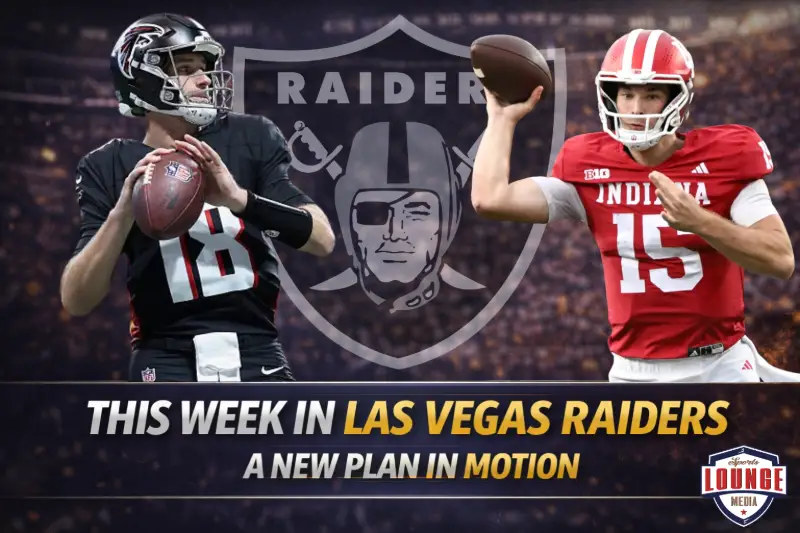
Not too long ago, the Raiders were selling hope without a real blueprint. Vegas had energy, star power, and headlines, but the football side often felt like it was being drawn in pencil week‑to‑week instead of inked in for the long haul. This week, everything feels different. There's a new head coach in Klint Kubiak, a new direction in the front office, a top‑of‑the‑draft franchise quarterback on deck in Fernando Mendoza, and now a veteran starter in Kirk Cousins walking through the door.
For Raider Nation, this isn't just another offseason. This is the start of a new era in all caps. The offseason program is kicking off, the quarterback room got a serious jolt, and for once the short‑term and long‑term plans actually look like they're having the same conversation. That's the story this week in Las Vegas.
The Klint Kubiak Era Really Starts Now
The first thing you feel around this team is structure. Klint Kubiak doesn't arrive as a celebrity hire or a throwback name; he arrives as an offensive mind with a clear vision and receipts from systems that actually work in today's NFL. He's lived in that Shanahan‑tree world in Minnesota and San Francisco‑style offenses, where the plan is built around timing, play‑action, and making life easier on the quarterback instead of demanding hero ball on every snap.
The offseason program is where that vision gets translated from whiteboard to grass. Phase 1 is about strength, conditioning, and classroom work. Phase 2 starts to bring position groups onto the field together. By the time the full‑team work and mandatory minicamp roll around, you're not just running plays, you're speaking a whole new football language. In a normal year, that's important. In a year where you're resetting the entire offensive identity and trying to onboard a rookie franchise quarterback, it's everything.
What should Raider fans be watching for right now? Watch tempo. Does practice look organized, urgent, and detailed? Watch how vets talk about the scheme in interviews, you hear words like "clear," "defined," "answers," or does it sound like they're still trying to figure it out? And watch how younger players react. When a new staff comes in, it usually unlocks somebody who was stuck in neutral. That breakout or two can tell you a lot about whether the message is landing.
The biggest difference, though, is alignment. For the first time in a while, the general manager and the head coach feel like they're rowing in the same direction. The front office isn't trying to build a roster for one style of ball while the coach is calling plays like he's living in a different world. The Kubiak-Spytek partnership is designed to keep that from happening again.
All Roads Lead to Fernando Mendoza
All of this structure and all of this planning exist for one main reason: Fernando Mendoza.
The projected No. 1 pick isn't just another quarterback prospect, he's the kind of player you reset a timeline for. You don't pick someone at the top of the draft just to "see what happens." You do it because you believe he can be the face of your franchise for the next decade. Mendoza brings the traits that match what this offense wants to be: accuracy, poise, eyes that stay downfield, and a willingness to take what's there instead of forcing hero throws just to get on a highlight reel.
On tape, Mendoza is the guy who doesn't blink on 3rd and 8. The pocket starts to squeeze, the edge rusher gets home, and instead of bailing out or drifting into pressure, he hitches, stands tall, and delivers on time. That "boring" trait, being on time and on schedule is exactly what Kubiak's system feeds on. The whole structure is built around timing routes, play‑action looks, and progression reads that reward discipline.
His pro day and top‑30 visit to Vegas only amplified the noise. You could almost feel the temperature change. It went from "If they get Mendoza…" to "When he gets here, what's the plan?" That's an important shift. Once you accept that your future under center has a name and a face, the next question becomes how you protect that investment.
Which leads straight to the move that flipped the script this week.
Why the Raiders Picked Up Kirk Cousins
The Kirk Cousins signing isn't a random splash; it's a strategy move. It tells you how this staff and front office think about building around Fernando Mendoza, and it says a lot about where this team wants to be in 2026 and beyond.
The Bridge, Not the Block
Let's start here: Kirk Cousins is a bridge, not a roadblock.
The worst thing you can do with a young franchise quarterback is hand him the keys to a team that's still under construction, then blame him when the wheels wobble. We've watched the league chew up and spit out talented rookies in bad situations for years. Throwing Mendoza out there in Week 1, behind a line that's still gelling, in a playbook his teammates don't yet own, would be asking for avoidable scars.
Cousins gives you a different path. He can start the season, run the offense, and keep the team competitive while Mendoza learns the system from the sideline, in the meeting rooms, and in spot duty when and if the staff feels he's ready. You get real NFL reps in practice, a live example of how the offense should look on Sundays, and the freedom to pick Mendoza's moment instead of having it picked for you by desperation.
That's not blocking the future, that's protecting it.
The Money Looks Loud, The Structure Is Smart
On its face, a five‑year, 172‑million‑dollar contract screams "We're all‑in on Cousins." Look one layer deeper, and the picture changes.
The way the deal is structured, the Raiders are really making a short‑term commitment with flexibility. The early‑year cash and guarantees line up more like a high‑end bridge quarterback than a long‑term, no‑way‑out franchise anchor. It's an investment in competence and stability now, with outs built in later if Mendoza becomes exactly who you think he is.
This is how grown‑up front offices operate. They accept that competence costs money in the NFL, especially at quarterback, but they don't let sticker shock keep them from making the right football move. The contract protects the team long term even while it secures the veteran leader they need in the present.
Scheme, Trust, and Translation
One of the most underrated pieces of this entire equation is familiarity. Cousins and Kubiak have history together from their Minnesota days. Cousins already knows the language, the reads, and the expectations baked into this style of offense. That matters a lot when you're trying to flip a unit's identity in one offseason.
Instead of installing a brand‑new playbook with 11 guys learning from scratch, Kubiak now has a quarterback on the field who speaks the scheme fluently. Cousins can be an extension of the coaching staff, getting receivers lined up correctly, adjusting protections, and showing everyone, in real time, what "right" looks like in this system.
For Mendoza, that is priceless. He's not just reading it on a tablet or hearing it in the quarterback room; he's watching it executed by a veteran who has played a lot of ball in this exact kind of offense. When the time comes for him to take over, he's stepping into an operation that already runs at NFL speed instead of trying to build it from scratch around him.
Is the move unpopular with some corners of the fanbase? Of course. Big contracts and big names always bring big opinions. But when you zoom out, Cousins isn't a sign the Raiders don't believe in Mendoza, he's a sign they're serious about giving Mendoza the best chance to succeed.
One Move Away: Weapons, Rumors, and Complementary Football
Quarterback is the headline, but the rest of the roster matters just as much if this plan is going to work. That's why the rumors around potential additions like Alvin Kamara or Jerry Jeudy are so interesting.
Kamara would give this offense a versatile back who can run inside, bounce outside, and be a real factor in the passing game. In a system that majors in play‑action and wants to stay ahead of the chains, having a back who can force defenses to declare their intentions is huge. He turns checkdowns into explosives and makes life easier on whichever quarterback is under center.
Jeudy, on the other hand, fits perfectly into the intermediate part of the field this offense loves. His route running, especially on digs, overs, and option routes, would give Cousins and eventually Mendoza, a reliable separator on the timing throws this system specializes in. You don't need a receiver to live on go balls when you're trying to play efficient, control‑the‑game football. You need someone who can win at 8–18 yards on schedule, and that's Jeudy's lane.
Add in the focus on special teams and depth, bringing in a veteran coordinator, emphasizing core‑team guys, tightening up the kicking game and you start to see a complete picture. This isn't a "fantasy football" build. It's a complementary football approach: offense, defense, and special teams all designed to support a young quarterback instead of asking him to rescue them.
Draft Strategy: Building the Rest of the House
Now add the draft to the mix.
If Mendoza is the linchpin at the top, the rest of the board becomes about supporting that investment and giving this coaching staff the tools they need to run their vision. Expect the Raiders to stay active in the secondary and in the trenches early.
You could easily see them target a versatile defensive back or someone who can play inside, tackle, blitz, and take away the quick game. That kind of "Ronde Barber‑style" player doesn't just pile up stats; he changes how offenses attack you. Pair that with big, athletic bodies on both lines and you're sending a clear message: this team wants to win from the inside out.
Trade‑back scenarios will hover over the conversation too. If the front office feels locked in on Mendoza and comfortable with their read on the board, sliding back slightly to pick up extra capital is on the table. More picks in the top 100 means more chances to fill out the roster with players who fit this scheme and timeline.
The key thing to remember: every pick now gets judged through the Mendoza/Cousins lens. Does this player help the quarterback, protect him, get him the ball, or get the ball back to him faster? If the answer is "no," that prospect better be special.
What It All Means for 2026
So where does that leave the Raiders for 2026?
Realistically, this season doesn't have to end in a confetti shower for it to be a success. The goal is to prove the organization has a coherent plan and the discipline to stick to it. The ceiling looks like this: Cousins stays healthy, the offense clicks early, the defense holds up its end, and the Raiders spend the year in the playoff conversation while Mendoza develops in the background and maybe gets a taste of real action late.
The floor looks different. Cousins could get banged up, forcing Mendoza onto the field earlier than planned. Growing pains would be part of the deal. But even in that scenario, the structure matters. If the system is sound, the locker room is aligned, and the roster keeps trending in the right direction, you're still building something real instead of spinning your wheels.
For the first time in a long time, the biggest storyline around the Raiders isn't chaos, it's construction. There's a blueprint now. You can agree or disagree with every move, you can debate Cousins, you can argue about which receiver or corner they should draft, but you can't say this is aimless.
This week in Las Vegas, the Raiders look like a team that knows who they want to be. That alone is a win worth talking about.