
What Ryan Craig Brings to the Golden Knights — And Whether It Keeps Vegas in Contention
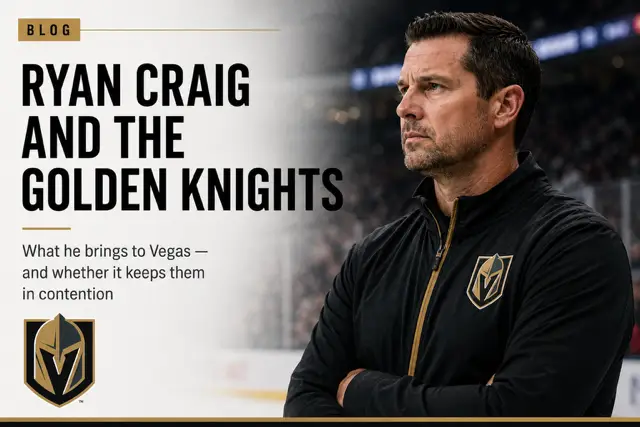
Ryan Craig brings continuity, organizational knowledge, player-development experience, and a coaching style that aligns with how the Golden Knights have built their identity since inception. His background inside the Vegas system and his work leading the Henderson Silver Knights make him a logical fit for a win-now team that also needs internal growth to remain a contender.
Why This Hire Matters
The Golden Knights are not hiring a coach to start over. They are turning to someone who has already lived the standards of the organization from its inaugural season through a Stanley Cup championship. Craig joined Vegas as an assistant coach in 2017 and remained part of the NHL staff through the club's rise into one of the league's most aggressive and consistently competitive franchises.
That matters because Vegas is not in a phase where patience is the selling point. This is a franchise that expects to compete immediately, and Craig's familiarity with the roster, internal expectations, and organizational structure reduces the adjustment period that often comes with a new head coach. Rather than spending a season teaching an entirely new language, Vegas can move forward with a coach who already understands the culture and what winning hockey looks like inside this building.
His Experience Inside the Organization
Craig's strongest credential may be how much of the Golden Knights' story he has already been part of. He served on the NHL bench during the franchise's first run to the Stanley Cup Final and later became part of the staff that won the Stanley Cup in 2023. That gives him something a lot of first-time NHL head coaches do not have: direct experience coaching meaningful games deep into the postseason within the exact environment he is now being asked to lead.
His move to Henderson in 2023 added another layer to that résumé. As head coach of the Silver Knights, Craig was no longer only part of a staff; he became the lead voice responsible for setting the daily tone, managing development, and balancing teaching with the demand to win. That transition matters because it showed he could run a full bench, oversee a room, and shape a culture rather than simply contribute to one.
Craig's playing background also informs his credibility. As a longtime AHL captain and respected professional, he built his reputation as a leader rather than a star, which often translates well in coaching because it is rooted in detail, communication, and accountability. For a veteran Vegas room, that profile matters because players tend to respond to a coach who has earned authority through experience and clarity, not just title.
What He Specifically Brings to VGK
Craig brings a clear understanding of what Vegas hockey is supposed to look like. The Golden Knights have traditionally been at their best when they are layered defensively, hard to play against, aggressive in puck pressure, and connected through all four lines. Because Craig helped build and reinforce those standards during his years as an assistant, he is positioned to preserve the team's identity while making smaller refinements rather than forcing a dramatic reset.
He also brings a communication style that appears built for today's player. In public comments and coaching discussions, Craig has emphasized communication, chemistry on a staff, and making sure players understand what is being asked of them. That can be especially valuable for a veteran team because experienced players usually do not need motivational theater; they need honest expectations, role clarity, and consistency.
Another major asset is his emphasis on purposeful practice habits. Craig has discussed maximizing practice time and using competition to drive performance, signaling a coaching approach built around focused reps and a demanding standard rather than empty volume. For a team like Vegas, that matters because veteran contenders often need efficient, high-quality work more than exhausting workloads.
Finally, he brings a direct link between the NHL and AHL levels. Because he recently coached Henderson, Craig already knows the strengths, weaknesses, and readiness of the players most likely to be called up or pushed into larger roles. In a cap-conscious era, that type of knowledge can help Vegas get more value from younger and cheaper contributors.
Development Without Lowering Standards
One of the clearest themes in Craig's public comments is that development and winning should not be treated as opposing ideas. When he took over in Henderson, he described the AHL role as requiring both player development and a winning environment. He has also publicly reinforced the idea that winning habits are part of development, not something separate from it.
That philosophy matters for Vegas because the roster construction reality is changing. The Golden Knights are still built to win now, but the salary cap and the long-term cost of aggressive roster building mean they increasingly need internal options to contribute real value. A coach who can integrate younger players without watering down standards is extremely useful for a contender trying to stay dangerous over multiple seasons.
This does not mean Craig turns Vegas into a youth project. It means he may be better positioned than many outside hires to identify who can help immediately, who needs more time, and how to prepare those players to fit a playoff-level structure. That blend of urgency and development is one of the strongest arguments in favor of what he brings to the organization right now.
Does His Background Make Vegas a Contender?
A coach alone does not make a team a Stanley Cup contender, but Craig's profile fits the type of coach a contender should want. He offers continuity for a proven core, teaching for the next wave of contributors, and enough familiarity with the organization to avoid the disruption that sometimes comes with a total philosophical shift. Those qualities do not guarantee a championship, but they do support the argument that Vegas can remain in the contender tier under his leadership.
There are several reasons the case is strong. First, continuity matters when a roster still has championship expectations, and Craig's long tenure within the organization should shorten the transition from one coach to the next. Second, his development track record in Henderson could help Vegas improve the quality of its depth, which is often what separates good playoff teams from true threats over four rounds. Third, his practice philosophy and communication style appear to match what a veteran room needs: accountability, detail, and clarity without unnecessary noise.
The biggest open question is the one attached to any first-time NHL head coach: how those strengths translate over a full season and into playoff series when the pressure is highest. Still, Craig is not entering that test cold; he has been on the NHL bench for deep runs, he has already held a head-coaching role in Henderson, and he understands the expectations of this market. For that reason, the hire looks less like a gamble on upside and more like a calculated bet on fit.
Why the Fit Makes Sense for Vegas
Vegas has never operated like a franchise interested in waiting around. The organization values urgency, standards, and alignment from top to bottom, and Craig's background makes him a natural extension of that model. He knows the internal demands, understands how the front office wants the team to play, and has recent experience with the players in Henderson who could become part of the NHL solution.
That fit could prove especially important in the middle of a contender window. A coach who needs a year to fully install his philosophy can cost a team valuable time, but Craig's promotion suggests Vegas is trying to protect its window rather than reset it. If the Golden Knights stay healthy and get strong contributions from both their core and supporting cast, his background gives the organization a credible path to remain dangerous in the Western Conference.
Final Thoughts
Ryan Craig brings experience, continuity, and a developmental edge that directly address what the Golden Knights need at this stage. He knows the standard because he helped build it, he understands the pipeline because he has recently coached it, and his emphasis on communication and competition aligns with the demands of a veteran team still trying to win at the highest level.
Does that automatically make Vegas a Stanley Cup favorite? No. Rosters, health, special teams, and playoff execution will still decide that. But Craig gives VGK something important: a coach whose experience fits the organization's identity and whose strengths support the idea that this team can remain a legitimate contender rather than drift into transition.